Mosquitoes
The Facts About Mosquitoes
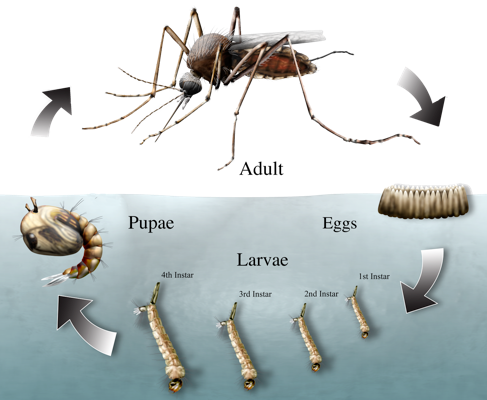
All mosquitoes must have standing water to complete their life cycle.It only takes 7 days for a mature mosquito to develop from an egg during warm weather.Mosquitoes do not hatch in grass or shrubbery unless standing water lies beneath. Adults may be seen resting in these areas.
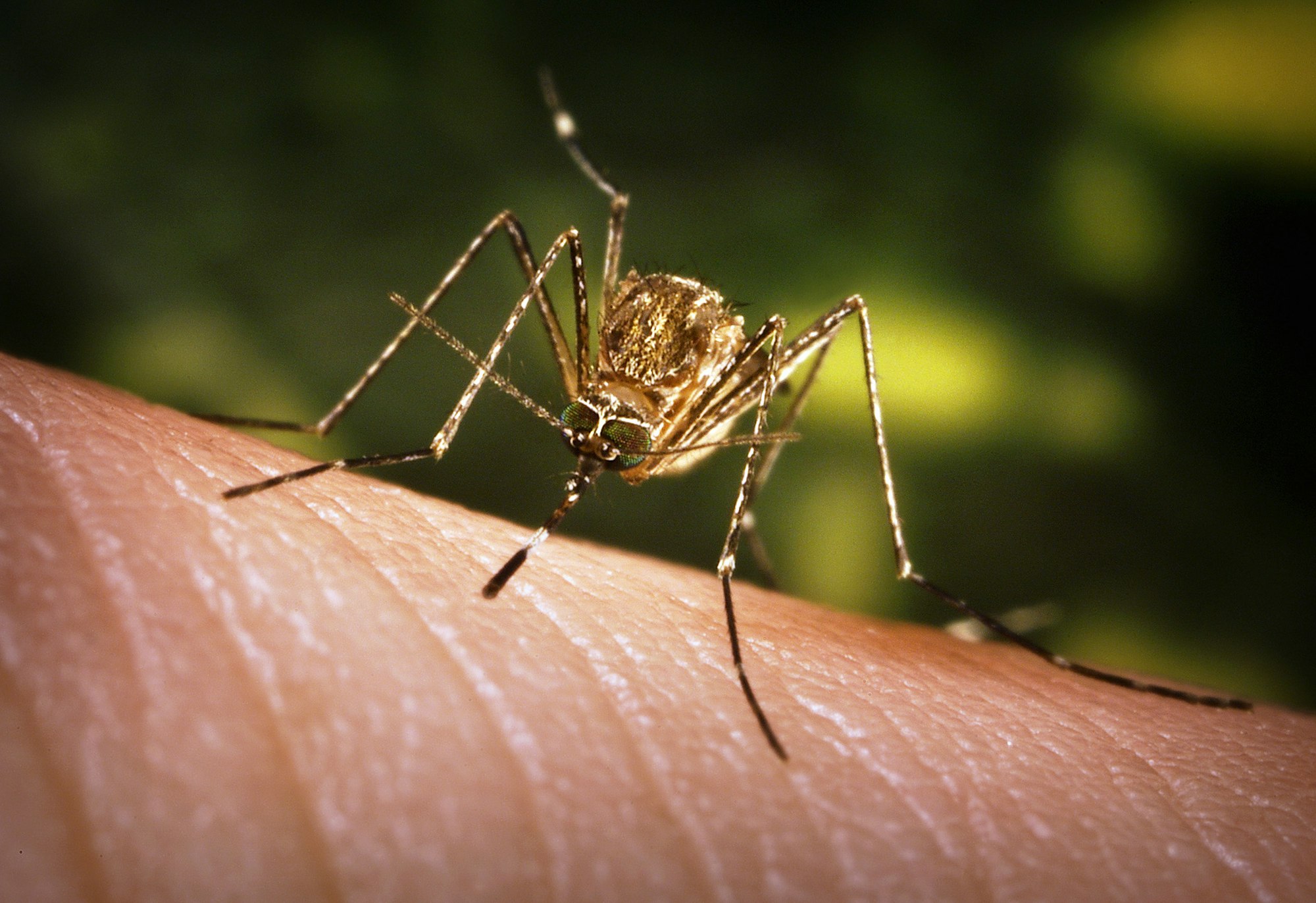
Only the female mosquito bites. She uses the blood meal obtained in order to produce eggs. The male feeds only on plant juices and is incapable of breaking the skin. Mosquitoes may live as long as 3 weeks during the summer. They may live several months during the winter, surviving in protected areas to start a new generation in the spring.
How to Prevent Breeding
Since all mosquitoes require stagnant water for development, eliminating this source is the simplest and most effective action.
•For pools, operate filter or skimmer everyday to remove egg rafts and larvae.
•Remove rainwater from pool cover.
•Stock "out of order" pools with mosquito fish.
•Change water in animal troughs weekly.
•Dispose of unused containers that will collect rain or sprinkler water such as barrels, cans, jars, old tires, buckets, etc. Store desirable containers upside down.
•Stock ornamental ponds with mosquito fish.
The Disease Cycle
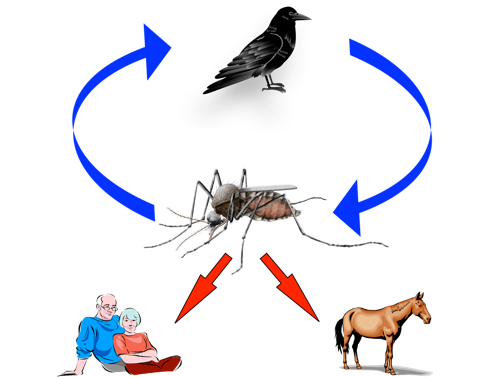
Over the course of history, mosquito vectored disease has been responsible for more human sickness than any other disease. The most common diseases in California cause encephalitis (brain swelling). The three most common forms are St. Louis (SLE), western equine (WEE) and West Nile virus (WNV). All these diseases are carried by wild birds. Infected birds are bitten by local mosquitoes that may transmit the virus to humans and horses if they are bitten.
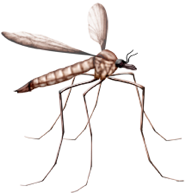
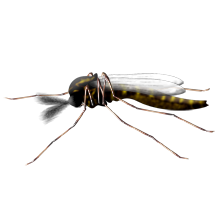
Mosquito Imposters

Mosquito Surveillance Equipment